
Updated: October 2026
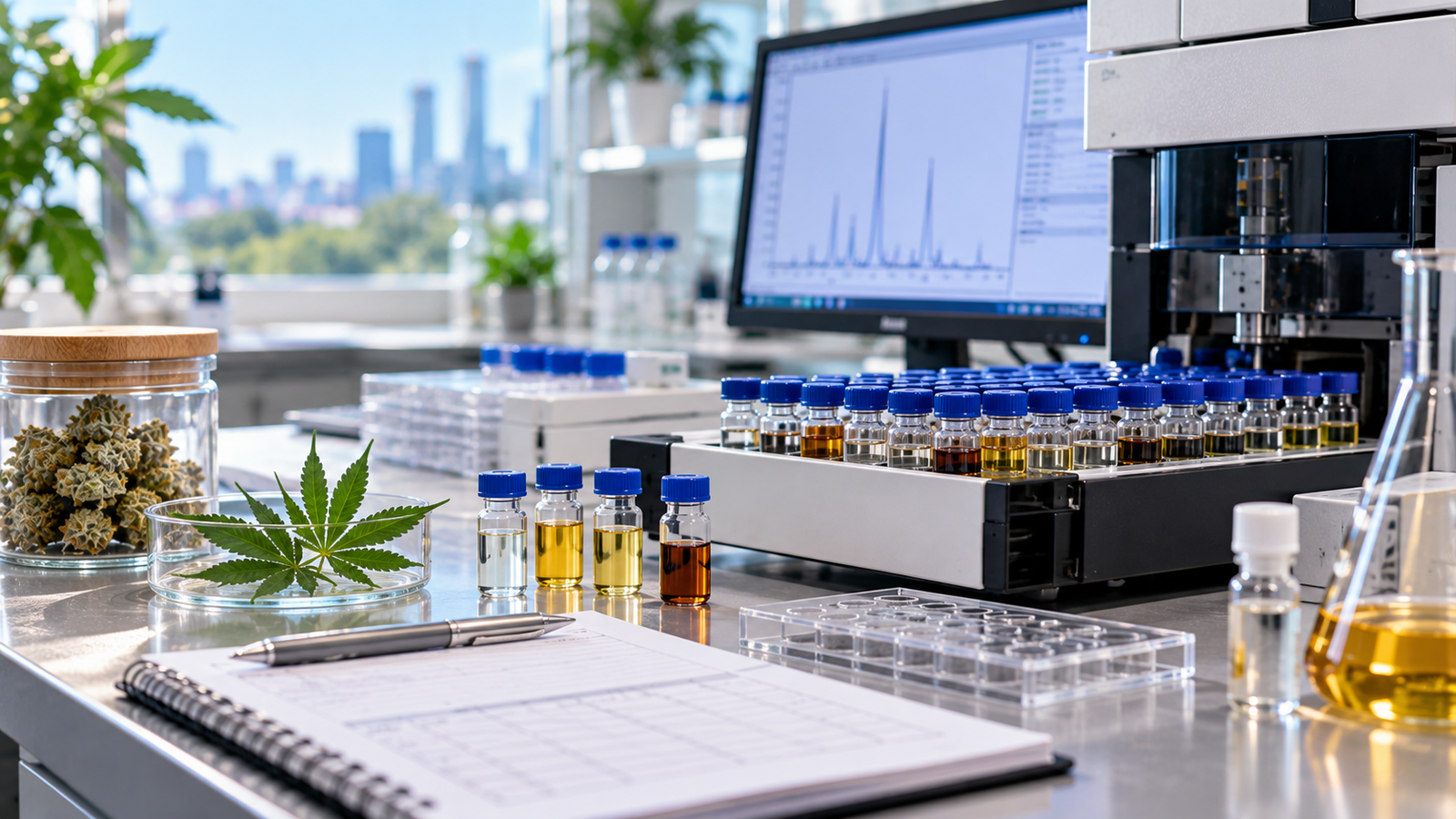
Introduction
Accurate laboratory analysis is essential for understanding the identity, composition, and quality of cannabis-derived chemical compounds.
As scientific interest in cannabidiol (CBD), tetrahydrocannabinol (THC), cannabigerol (CBG), and other cannabinoids continues, laboratories increasingly rely on validated analytical methods to characterize complex cannabis materials.
For organizations researching cannabinoid laboratory testing in the USA, a Certificate of Analysis (COA) can provide important information about cannabinoid concentrations, potential contaminants, and product quality.
However, interpreting a COA requires more than reviewing a single THC or CBD percentage.
Factors such as sample preparation, analytical methods, measurement uncertainty, reporting limits, laboratory competence, and the applicable legal framework can significantly affect how results should be understood.
This guide explains common cannabinoid testing methods, key laboratory quality indicators, contaminant analysis, and regulatory considerations relevant to the United States in 2026.
1. What Is Cannabinoid Laboratory Testing?
Cannabinoid laboratory testing refers to analytical procedures used to identify and measure chemical compounds associated with cannabis and hemp materials.
Testing may involve raw botanical material, intermediate extracts, purified compounds, or finished products.
Different tests answer different questions.
For example, a potency test evaluates the concentration of selected cannabinoids, while a contaminant test investigates the presence of potentially harmful substances.
Common Analytical Objectives
Laboratories may conduct testing to:
- Identify cannabinoids in a sample.
- Quantify THC, CBD, and other target compounds.
- Characterize acidic and neutral cannabinoid forms.
- Evaluate chemical purity.
- Detect residual solvents.
- Screen for pesticides and heavy metals.
- Assess microbiological contamination.
- Investigate chemical stability.
- Support research and quality documentation.
The appropriate testing program depends on the sample type, intended application, and relevant regulatory standards.
2. Understanding Cannabinoid Potency Testing
Potency testing is one of the most widely recognized categories of cannabis laboratory analysis.
It provides information about the concentration of selected cannabinoids.
Commonly Analyzed Cannabinoids
A cannabinoid potency panel may include:
- Delta-9-tetrahydrocannabinol (Delta-9 THC).
- Tetrahydrocannabinolic acid (THCA).
- Cannabidiol (CBD).
- Cannabidiolic acid (CBDA).
- Cannabigerol (CBG).
- Cannabigerolic acid (CBGA).
- Cannabinol (CBN).
- Cannabichromene (CBC).
The exact compounds measured depend on the laboratory method and analytical scope.
Why Acidic Cannabinoids Matter
Some cannabinoids naturally occur in acidic forms.
For example, THCA can be converted into THC through decarboxylation, which involves the removal of a carboxyl group.
Similarly, CBDA can be converted into CBD.
Because of this relationship, laboratory reports may distinguish between individual cannabinoids and calculated total cannabinoid values.
3. HPLC Testing for Cannabinoid Analysis
High-Performance Liquid Chromatography (HPLC) is an important analytical method used in cannabinoid research.
How HPLC Works
HPLC separates chemical compounds based on their interactions with a stationary phase and a liquid mobile phase.
As different components move through the analytical system, they may elute at different times.
A suitable detector generates signals that can be used for identification and quantification after appropriate method validation.
Advantages of HPLC
HPLC can be especially useful for analyzing cannabinoids because it can distinguish certain acidic and neutral forms without requiring the high temperatures commonly associated with gas chromatography.
For example, a properly validated method may separately measure THCA and delta-9 THC.
This distinction matters for research and compliance evaluations.
Limitations
HPLC results depend on:
- Sample preparation.
- Reference standards.
- Separation performance.
- Detector suitability.
- Calibration.
- Method validation.
- Analytical interferences.
An HPLC result should not be considered reliable solely because the laboratory uses an expensive analytical instrument.
4. Gas Chromatography and Mass Spectrometry
Gas Chromatography–Mass Spectrometry (GC-MS) is another important technique in analytical chemistry.
Applications of GC-MS
Depending on the validated method, GC-MS may be used for:
- Residual solvent testing.
- Volatile compound identification.
- Certain cannabinoid analyses.
- Chemical impurity investigations.
Gas chromatography separates suitable volatile compounds, while mass spectrometry provides information about their mass-related characteristics.
HPLC vs. GC-MS
| Feature | HPLC | GC-MS |
|---|---|---|
| Separation method | Liquid chromatography | Gas chromatography |
| Common application | Cannabinoid potency | Volatile compounds and residual solvents |
| Acidic cannabinoid analysis | Can distinguish acidic and neutral forms | Requires appropriate treatment of thermal effects |
| Detection | UV, DAD, MS or other detectors | Mass spectrometry |
| Method validation | Required | Required |
Neither technique is universally superior.
The appropriate method depends on the analytical objective and the chemical properties of the compounds being studied.
5. How to Read a Cannabis Certificate of Analysis
A Certificate of Analysis is a document presenting laboratory results associated with a particular sample or batch.
COAs vary between laboratories, product categories, and jurisdictions.
Information Typically Included
A well-documented COA may contain:
- Laboratory identification and contact details.
- Sample name and description.
- Batch or lot number.
- Sample receipt date.
- Testing and report dates.
- Analytical methods.
- Reported cannabinoid concentrations.
- Contaminant results, where tested.
- Units of measurement.
- Reporting or quantitation limits.
- Applicable specifications.
- Report authorization information.
Understanding Potency Units
Cannabinoid concentrations may be presented using different units.
Examples include:
- Percentage by mass (% w/w).
- Milligrams per gram (mg/g).
- Milligrams per millilitre (mg/mL).
- Milligrams per unit or container.
The units must be considered before comparing results.
For example, a result expressed in mg/g cannot automatically be interpreted as mg/mL without additional information about the sample.
Understanding ND and LOQ
ND generally means Not Detected under the relevant analytical conditions.
LOQ refers to the Limit of Quantitation, the lowest quantity that can be reliably quantified under the validated method.
A result below the detection or quantitation limit does not necessarily mean a chemical is completely absent.
Does a COA Prove Legal Compliance?
No.
A COA provides analytical information but does not independently establish that a product is legally marketable.
Regulatory classification may depend on ingredient restrictions, product form, intended use, packaging, marketing claims, and federal or state requirements.
6. Total THC Testing and U.S. Hemp Regulations
THC measurement has particular importance under United States hemp regulation.
Total THC and THCA
Under USDA hemp production testing guidance, laboratories must account for the potential conversion of THCA into delta-9 THC.
A commonly used calculation is:
Total THC = Delta-9 THC + (THCA × 0.877)
The factor accounts for the difference in molecular mass associated with decarboxylation.
Results must use consistent units and be interpreted under the applicable testing protocol.
Measurement Uncertainty
USDA hemp testing guidance also requires laboratories to evaluate and report measurement uncertainty.
Measurement uncertainty reflects the range of values reasonably associated with an analytical result.
It is particularly important when evaluating measurements close to a regulatory limit.
Federal Regulatory Changes in 2026
Under amendments enacted on November 12, 2025, the federal definition of hemp is scheduled to change on November 12, 2026.
The revised definition incorporates total tetrahydrocannabinols, including THCA, and introduces additional exclusions affecting certain intermediate and finished cannabinoid products.
These changes make accurate chemical classification and analytical documentation especially relevant.
Laboratories and businesses must distinguish among hemp crop compliance testing, finished-product testing, and other regulatory requirements.
They are not automatically governed by identical procedures.
7. Residual Solvent Testing
Residual solvents are chemical substances that may remain in a material following processing.
Their significance depends on the particular chemical, concentration, and intended use of the product.
Common Analytical Targets
Depending on the sample and testing requirements, laboratories may evaluate chemicals such as:
- Ethanol.
- Acetone.
- Heptane.
- Hexane.
- Other relevant organic solvents.
The inclusion of a solvent in a testing panel does not establish that it was used during production.
Analytical Considerations
Headspace gas chromatography is one technique commonly used to evaluate volatile residual solvents.
Reliable assessment requires suitable analytical methods and applicable acceptance criteria.
The fact that a substance is not detected must be interpreted in relation to the method’s reporting limits.
8. Pesticide and Heavy Metal Testing
Contamination testing is important because botanical materials can be exposed to environmental substances.
Pesticide Analysis
Laboratories may use liquid chromatography–mass spectrometry or gas chromatography–mass spectrometry to analyze selected pesticides.
The applicable target list and acceptance limits vary by jurisdiction and product category.
Heavy Metal Analysis
Inductively Coupled Plasma Mass Spectrometry (ICP-MS) can be used to measure trace elements.
Commonly investigated metals include:
- Lead.
- Cadmium.
- Arsenic.
- Mercury.
Why Product Type Matters
The significance of contamination depends on factors such as concentration, exposure route, use frequency, and applicable standards.
An analytical result cannot be interpreted properly without considering these details.
9. Microbiological Testing
Cannabis plant materials and certain derived products may be exposed to microorganisms during cultivation, handling, processing, or storage.
Depending on the material and intended use, laboratories may investigate:
- Yeasts and moulds.
- Certain bacterial contaminants.
- Selected pathogenic microorganisms.
- Other microbiological indicators.
Testing procedures must be appropriate for the sample matrix.
Microbiological quality is especially relevant because different products may involve very different exposure routes and associated risks.
10. Laboratory Accreditation and ISO/IEC 17025
ISO/IEC 17025 is an international standard addressing the competence of testing and calibration laboratories.
Accreditation can provide evidence that a laboratory has demonstrated competence within an assessed scope.
Important Accreditation Considerations
Businesses and researchers should review:
- Whether accreditation is current.
- Whether the specific analytical method falls within the accredited scope.
- Whether the laboratory participates in proficiency testing.
- Whether analytical instruments are appropriately calibrated.
- Whether the laboratory maintains quality control procedures.
- Whether relevant regulatory registration requirements are met.
An accredited laboratory is not necessarily accredited to perform every type of cannabinoid or contaminant analysis.
Third-Party Testing
Independent testing can help reduce certain conflicts of interest.
However, third-party status alone does not guarantee accuracy.
Analytical competence, sampling practices, transparency, and method validation remain important.
11. Common Mistakes When Interpreting Cannabis Testing Results
Comparing Different Measurement Units
Potency values expressed in percentages, mg/g, or mg/mL should not be compared without appropriate conversion.
Ignoring Sample Representation
A laboratory result describes the sample tested.
It may not accurately characterize an entire batch if sampling is not representative.
Treating ND as Absolute Zero
Not detected does not necessarily mean no molecules of the substance are present.
Assuming Every COA Includes Full Contaminant Testing
Some reports include only cannabinoid potency.
Other panels may be separate.
Confusing Analytical Compliance With FDA Approval
A favorable COA does not mean the FDA has approved a product.
Using Outdated Regulatory Thresholds
U.S. federal hemp requirements and state-level cannabis regulations can change.
A compliance interpretation should identify the applicable date and jurisdiction.
12. The Future of Cannabinoid Analytical Testing
Cannabinoid research continues to raise questions involving chemical identity, impurities, product stability, and analytical reliability.
Areas of continuing scientific development include:
- Improved cannabinoid separation techniques.
- More sensitive impurity detection.
- Standardization of analytical methods.
- Better characterization of minor cannabinoids.
- Measurement uncertainty evaluation.
- Improved laboratory quality management.
- Identification of emerging chemical byproducts.
As analytical technology and regulatory requirements evolve, reliable laboratory data will remain central to scientific understanding and compliance assessment.
Frequently Asked Questions
1. What is cannabinoid laboratory testing?
Cannabinoid testing uses analytical techniques to identify and quantify compounds associated with cannabis materials, including CBD, THC, CBG, and their acidic forms.
2. What does a cannabis COA show?
A COA presents analytical results for a sample or batch. It may include cannabinoid potency, contaminant testing, analytical methods, and other relevant quality information.
3. Is HPLC better than GC-MS for testing cannabinoids?
HPLC is useful for distinguishing certain acidic and neutral cannabinoids. GC-MS has important applications in volatile compound and residual solvent testing. The best method depends on the analytical purpose.
4. What does total THC mean?
Total THC refers to a calculated or measured value that accounts for delta-9 THC and the potential contribution of THCA, using an appropriate analytical and regulatory method.
5. What does ND mean on a COA?
ND usually means Not Detected. The result should be interpreted alongside the laboratory’s detection limit and analytical method.
6. Why are heavy metals tested in cannabis materials?
Heavy metal testing evaluates possible contamination involving substances such as lead, cadmium, arsenic, and mercury.
7. Does ISO 17025 accreditation guarantee a cannabis product is safe?
No. Laboratory accreditation concerns competence within a defined testing scope. It does not automatically establish product safety, legal compliance, or regulatory approval.
8. Does a cannabis COA prove a product is legal in the United States?
No. Legal status depends on federal and state requirements, product classification, intended use, and other factors beyond laboratory test results.
Conclusion
Cannabinoid laboratory testing in the USA provides essential scientific information about cannabis-derived chemical compounds, including their identity, potency, and potential contaminants.
HPLC, GC-MS, ICP-MS, and other analytical techniques support different aspects of chemical characterization.
Certificates of Analysis can help researchers, quality professionals, and regulators understand laboratory findings, but they must be interpreted with attention to sample quality, testing methods, measurement uncertainty, and applicable legal standards.
With changes to the federal hemp definition scheduled for November 2026, understanding the differences between analytical results and regulatory classification will remain particularly important.
Disclaimer: This article is for educational, scientific, and regulatory information only. It is not legal, medical, or product manufacturing advice.
https://uscode.house.gov/us/usc/119-120/t7/s1639o/?utm_source=chatgpt.com